Have you noticed bookshelves on social media and television- many people like to sit in front of a bookshelf while being interviewed. I always look here and there, in front of and next to the books—what items represent values/secrets of the person whose head I see?
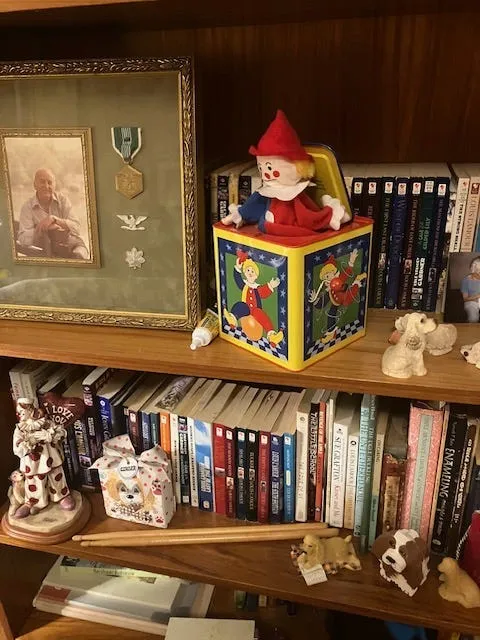
The picture with this post shows 2 shelves of my bookcase. In the past, I have taken a picture of myself in front of it, like the books and items say something more than is coming out of my mouth. It’s true. And some of what is seen are antidotes against the trauma I see, feel, and witness while evaluating people who are in trouble with the law and who may have been coping with trauma at the time of an incident, sometimes very tragic.
Looking at my 2 bookcase shelves, I see the picture of family member Don whose bravery is reflected in the army metals. His loyalty and support even included his attending some of my PhD classes and taking notes when I was away on a court case. Everyone loved when he came to class, full of questions!
I see a little tube hiding between Don and the little clown jack-in-the-box. It is Neosporin (ready go grab to dress a minor wound on Cinderella Cockerspaniel- Cinder). The times we live in feel to me like Jack (in-the-box) is always popped up—one crisis after another, never sinking back down into peace and calm. And a small picture of my mom rests beside it, to the right.
The books showing on the upper and lower shelf include some Perry Mason mysteries by Erle Stanley Gardner and westerns by Louis L’Amour. After hearing (trigger warning- shocking thing to come) someone tell me that they have killed the one they love most in this world, fearing their own life was about to be taken, these books seem like an antidote to my own trauma with the tragedy of two lives forever altered.
Cocker spaniels are sprinkled about—sometimes I think I see Cinder looking up at them. And the drum sticks, some say I play jazz and even rock on my drums with a zest, accompanied by the thumps of Cinder’s paw or jaw hitting the floor in time with the music. I notice that she does not always stop when I do, and wonder if her hearing may not be quite as sharp as it use to be.
Whimsy—I lean on it as an antidote to dilute my own trauma. When I lived in Fort Smith, Arkansas, I saw clowns in the rodeos. They were funny, yet had a serious mission—to protect fallen riders from being harmed by the bulls who’d bucked them off. Often wearing red, these daring clowns would draw the bull away from fallen riders and, when chased, hide behind a wooden door-like protector out in the middle of the arena.
There is a clown figure—sometimes, not real often, I do clowning. I am Dr. Heart, dressed in a white jacket and green surgical shirt and pants. As Dr. Heart, I ‘change broken hearts into whole hearts,’ using tricks and all. I place a large heart (red, felt) into a magical bag. Onlookers take turns making negative comments about the heart (you are ugly). They reach into the bag to pull out one after another smaller and smaller hearts after the audience delivers one emotionally abusive statement after another. How do the hearts keep growing smaller when I am holding a closed magical bag? It takes a chorus of praise and encouragement for someone to then reach into the magic bag and discover the heart has regrown from about 2 inches, diminished by abuse, sometimes tyrannical in nature, back up to 5-7 inches like its original state. The tyrannical nature of what some in the audience call out when invited, includes the heart being ‘worthless, stupid, not worthy of being listened to, even unpatriotic!’
Whimsy may serve to diminish ongoing trauma. After all, many people have a lot to do for the respect of different ideas and people to regrow.